
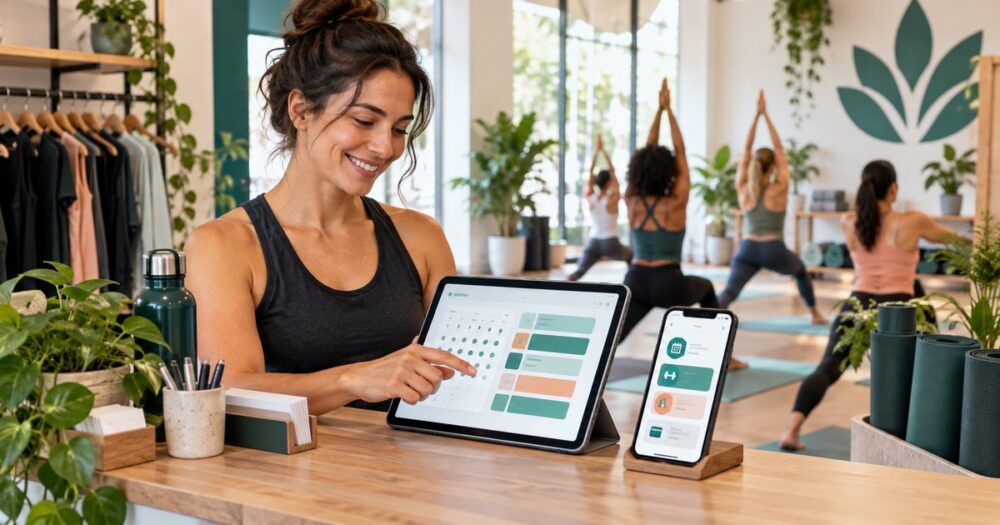
Quick answer: Fitness studios can sell recurring classes on Shopify by packaging each class, workshop, or program as a bookable product, then using Servv to manage schedules, capacity, confirmations, reminders, Zoom sessions, and Google Calendar visibility. The result is a commerce workflow that feels familiar to buyers and manageable for the studio team.
Most fitness studios do not lose growth because the instructor cannot teach. They lose it because the booking workflow is scattered. A customer sees a class on Instagram, sends a message, waits for a reply, asks about payment, misses the confirmation, and forgets the reminder. None of that feels dramatic in the moment, but it quietly drains attendance and staff time.
Shopify can solve more of this than many studio owners realize. It is not only a store for mats, supplements, apparel, and memberships. With a booking layer, Shopify can become the place where a studio sells time, access, coaching, community, and recurring class programs.
Why Shopify works for fitness class sales
Fitness customers already understand ecommerce. They know how to choose an option, check out, and receive a confirmation. The studio’s job is to make a class feel just as clear as a product: what it is, who it is for, when it happens, what it costs, and what the customer receives after purchase.
That is especially useful for studios that sell more than drop-in classes. A yoga studio may sell recurring class series, breathwork workshops, teacher training sessions, and online mobility classes. A boutique gym may sell small-group strength programs, assessment appointments, and paid nutrition workshops. Each one has a schedule and a commercial promise.
The fitness booking workflow
1. Turn the class into a clear product
Do not start with the calendar. Start with the offer. A stronger product title is “Six-Week Beginner Pilates Series” rather than “Pilates class.” A better description explains the outcome, difficulty level, class size, schedule, equipment, cancellation rules, and whether the session is in person or online.
The clearer the product, the easier the booking decision. This is where fitness studios can borrow discipline from retail: make the offer easy to understand before asking the customer to choose a time.
2. Attach recurring dates and capacity
Recurring classes should not require the team to duplicate the same event every week. Servv helps businesses create recurring events and booking flows so a studio can manage repeated sessions, group capacity, and customer reminders with less manual work.
Capacity matters because fitness is an experience business. Too many attendees can hurt the class. Too few can make the economics weak. A booking app should help the studio balance both without relying on spreadsheets or inbox notes.
3. Keep payment and booking close together
When customers pay in one place and reserve in another, the studio has to reconcile everything. That creates avoidable work for the front desk and avoidable uncertainty for the buyer. A Shopify-based booking flow keeps the decision, purchase, and class reservation close together.
For a broader platform view, see the Servv Shopify event booking app. The fitness industry page is also a useful next step for mapping class, workshop, and recurring session workflows.
4. Automate confirmations and reminders
The class is not really sold until the customer knows what happens next. Confirmation emails, reminder messages, calendar visibility, and mobile-friendly booking pages all reduce no-shows. For online or hybrid sessions, video access matters too.
Servv supports operational details such as Zoom-integrated events, Google Calendar sync, email confirmations, reminders, and branded embedded booking flows. That means the studio can spend less time nudging customers and more time delivering the class.
What fitness studios can sell through Shopify
| Offer | Best booking setup | Commercial upside |
|---|---|---|
| Weekly yoga class | Recurring group event with capacity | Predictable attendance and repeat revenue |
| Weekend workshop | Fixed event with reminders | Higher-ticket experience beyond memberships |
| Personal training consult | Appointment booking | Cleaner intake and paid discovery |
| Online mobility session | Zoom-connected event | Reach beyond the local studio |
| Six-week strength cohort | Recurring program | Program revenue instead of one-off drop-ins |
How to structure the product page
A fitness class product page should make commitment easy. Include the instructor, fitness level, duration, schedule, class capacity, delivery method, what to bring, cancellation policy, and what happens after purchase. If the class repeats, say exactly how often and whether the customer is buying one session or a full series.
- Headline: name the outcome or class format clearly.
- Booking module: show date, time, capacity, and delivery type close to the purchase decision.
- Trust details: include instructor context, who the class is for, and what customers should expect.
- Operational details: explain reminders, calendar invites, Zoom access, and arrival instructions.
- Follow-up: offer a next class, workshop, or program while the customer is engaged.
Servv’s point of view
Fitness booking is not just scheduling. It is revenue design. The studio is packaging energy, coaching, accountability, and community into something a customer can buy. The software should respect both sides: the customer’s need for a simple booking experience and the operator’s need for repeatable workflows.
This is why Shopify is such a strong channel for fitness studios. It can sell more than merchandise. It can sell a path into the studio’s community.
For official platform context, Shopify’s product documentation explains product setup basics. Google’s Calendar help is useful for studios coordinating instructors and locations.
FAQ
Can a fitness studio use Shopify for class booking?
Yes. A fitness studio can use Shopify for class booking by creating bookable class products and adding scheduling, capacity, confirmations, reminders, and calendar workflows with a booking app such as Servv.
Can Shopify sell recurring fitness classes?
Yes. Shopify can sell recurring fitness classes when the booking workflow supports repeat schedules and class capacity. This is useful for yoga series, strength cohorts, Pilates programs, workshops, and online training sessions.
What should a fitness class booking page include?
It should include the class outcome, instructor, fitness level, time, duration, capacity, location or video format, cancellation policy, reminders, and what the customer receives after checkout.
What lead magnet should fitness studios use?
A Fitness Studio Booking Workflow Template works well because it helps the team map class types, recurring schedules, capacity, reminders, instructor ownership, and follow-up campaigns before launch.
Next step
If your studio is ready to sell classes, workshops, or recurring programs through Shopify, start with one offer and make the booking path clean. Explore event booking for Shopify, review Servv’s platform, or book a demo to design the workflow.
Editorial note: Last updated September 16, 2026. Recommended schema: BlogPosting with FAQ content on the page.