
Not too long ago, planning an event meant relying heavily on instinct. Creators and organizers would ask questions like:
What topic will people like?
Should we run this session longer?
Sometimes those guesses worked. Sometimes they didn’t. But events in 2026 look very different. Today, events, whether they’re webinars, live shows, or virtual summits, are powered by something far more reliable than intuition: data.
Every registration, click, comment, and interaction tells a story. And creators who understand how to read that story are designing smarter, more engaging, and more profitable events.
Let’s explore how data-driven event planning is transforming the way creators and organizers plan events, and how you can start using it to improve your own events.
Why Events Are Becoming Data-First?
The creator economy has changed how audiences interact with events. Today’s audiences expect experiences that are personalized, engaging, and useful. That’s why successful creators are going for data-backed decision-making. Instead of guessing what attendees want, organizers can now analyze:
- Registration patterns
- Session engagement
- Social media reactions
- Post-event feedback
This information helps creators design events that are better targeted and easier to improve over time.
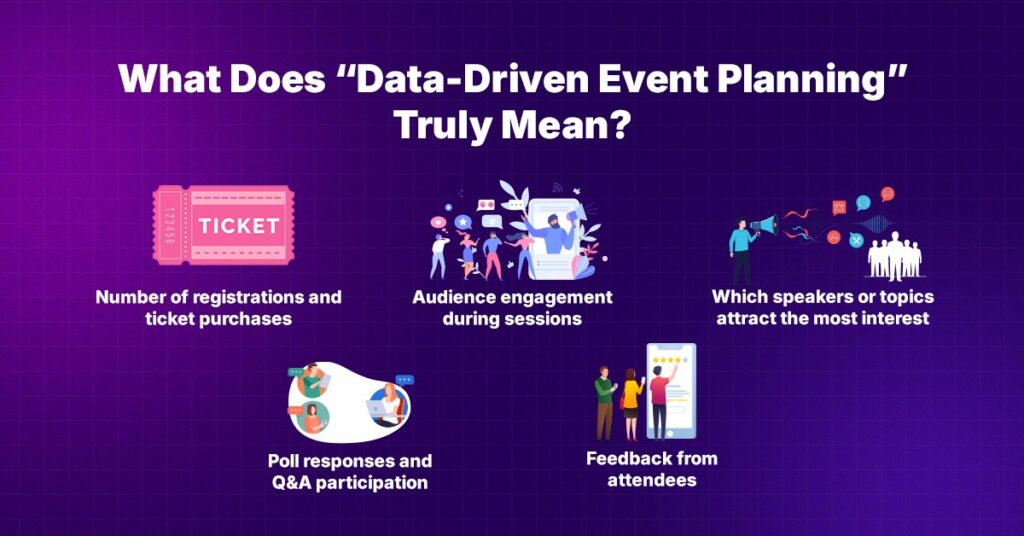
What Does “Data-Driven Event Planning” Truly Mean?
Data-driven event planning implies using measurable insights to plan future events with refined content strategy. Instead of random planning, you rely on real analytics to understand what your audience actually wants. For creators and influencers, this can include tracking things like:
- Number of registrations and ticket purchases
- Audience engagement during sessions
- Which speakers or topics attract the most interest
- Poll responses and Q&A participation
- Feedback from attendees
The Digital Footprints Your Audience Leaves Behind
One of the most powerful aspects of modern events is that every attendee interaction generates valuable data.
Think about it. Every time someone:
- Registers for your event
- Clicks a marketing email
- Joins a live session
- Participates in a poll
- Shares your event on social media
They leave behind a digital footprint. When analyzed properly, these footprints reveal patterns such as:
- What topics excite your audience
- When engagement peaks or drops
- Which promotional campaigns are working
- How attendees move through your event experience
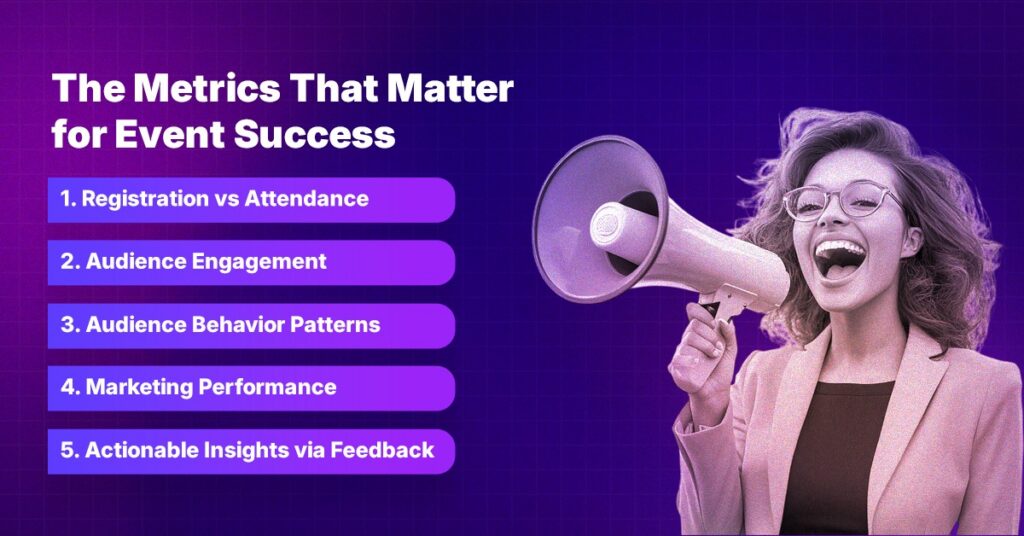
The Metrics That Matter for Event Success
Not all data is equally useful. Successful creators focus on a few key metrics that truly indicate event performance. Here are some of the most important ones.
1. Registration vs Attendance
Registrations are good, but attendance tells the real story. Tracking the difference between people who registered and those who actually showed up can reveal notable points like whether your event reminders were effective and if the event timing worked for your audience. A strong attendance rate often signals that your marketing and messaging resonated with your audience.
2. Audience Engagement
Engagement is often the best indicator of event quality. Metrics to monitor include:
- Chat activity during sessions
- Poll participation
- Questions asked during Q&A
- Networking interactions
- Social media mentions
High engagement means your audience is actively participating rather than passively watching. For creators, this is a major signal that your content is connecting.
3. Audience Behavior Patterns
Behavioral data shows how attendees interact with your event content.
For example:
- Which sessions had the highest attendance
- Where viewers dropped off in a webinar
- Which resources were downloaded
- Which networking opportunities were used
This helps you identify your strongest topics, weak points in your program, and areas of improvement.
4. Marketing Performance
Your marketing analytics reveal how people discovered your event. This includes tracking:
- Traffic sources for registrations
- Landing page conversion rates
- Email open rates
- Click-through rates
- Social media engagement
These insights help creators optimize their promotion strategy for future events. Instead of promoting everywhere, you can focus on the channels that actually convert.
5. Actionable Insights via Feedback
While behavioral data tells you what people did, feedback reveals how they felt. Post-event surveys and ratings can help you measure:
- Overall event satisfaction
- Content relevance
- Suggestions for improvement
Why Data Is a Game-Changer for Creators and Influencers?
For creators, events are becoming impactful growth engines. Data-driven events allow creators to:
- Build stronger communities
- Increase ticket revenue
- Improve audience loyalty
- Create repeatable event formats
For example, if your analytics show that workshops about monetization attract the most engagement, you can double down on that topic for future events. Instead of experimenting blindly, you’re refining what already works.
Technology Is Making Data-Driven Events Easier
The good news is that you no longer need complicated systems to run data-driven events. Modern event management tools can automatically track and analyze most of the important metrics. Platforms like Servv.ai help creators handle:
- Event registrations
- Ticket sales
- Attendee management
- Marketing insights
Features like registration dashboards, ticket sales tracking, and AI-powered networking tools make it easier to understand what’s happening inside your event. Instead of juggling multiple tools, creators can manage events and analytics from this single platform.
The Future of Events Is Intelligent and Interactive
Events are evolving rapidly. What used to be simple gatherings are now data-powered experiences designed to maximize engagement and impact. In the coming years, the most successful creators will be those who treat events as strategic experiences informed by real insights. By embracing data-driven event planning, you can:
- Understand your audience better
- Deliver more meaningful experiences
- Improve every event you host
- Build a loyal and engaged community
All in all, great events aren’t created by guesswork anymore. They’re built on data, insights, and a deep understanding of your audience.
Helpful ServvAI Resources for event booking software
If you are exploring event booking software, the ServvAI blog has more ideas on events, appointments, creator revenue, product education, and customer experiences.
Shopify merchants can review the ServvAI Shopify app, while WordPress and WooCommerce users can explore the ServvAI WordPress plugin for event booking and scheduling workflows.