

In the early days of social media, success was measured in millions. If you didn’t have a massive following, brands barely noticed you. But the creator economy has evolved dramatically.
Today, the spotlight has shifted toward micro-influencers, creators with smaller audiences but deeper connections. A micro-influencer typically has between 1,000 and 100,000 followers, often within a specific niche such as fitness, tech, beauty, finance, or education.
Instead of broadcasting to millions of passive viewers, these creators nurture tightly knit communities that trust their recommendations. And that trust changes everything.
Studies show that micro-influencers can achieve 3–8% engagement rates, significantly higher than the engagement seen by large creators with millions of followers. In fact, campaigns involving micro-influencers often generate higher conversions and ROI than those led by celebrity influencers.
The result? Even creators with small audiences can build sustainable income streams. Let’s explore how micro-influencers turn loyalty into revenue.
Why Small Audiences Can Be More Valuable
The biggest misconception about influencer marketing is that success depends on follower count. In reality, influence depends on trust and community engagement, which eventually turns out profitable during events.
Micro-influencers thrive because their audiences view them less like celebrities and more like peers. Their recommendations often feel like advice from a knowledgeable friend rather than an advertisement. Several factors make small audiences powerful:
1. Niche expertise
Micro-influencers usually specialize in specific topics such as vegan cooking, financial literacy, travel hacking, or gaming. Their audiences follow them specifically for that expertise.
2. Better engagement
Smaller communities tend to interact more actively with posts, videos, and live sessions.
3. Better conversion rates
Because followers trust the creator, they are more likely to purchase recommended products or join paid experiences.
This combination of authenticity, relevance, and engagement allows micro-influencers to monetize effectively, even with modest followings.
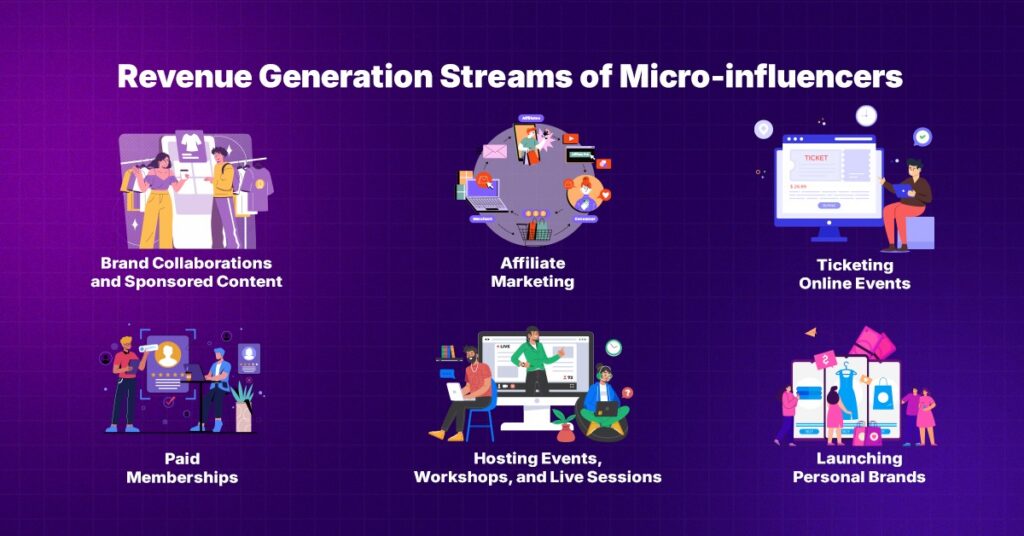
Revenue Generation Streams of Micro-Influencers
1. Brand Collaborations and Sponsored Content
The most recognizable monetization strategy is sponsored posts. Brands partner with micro-influencers because they offer access to highly targeted audiences. Instead of paying one celebrity influencer, companies often collaborate with multiple niche creators who reach the exact demographic they want.
For example, a fitness apparel brand may collaborate with several fitness micro-influencers, and a travel gear company may partner with adventure vloggers.
Because micro-influencers charge significantly less than celebrities but deliver strong engagement, brands often achieve better ROI from these collaborations. Even creators with 10,000 followers can earn through sponsored posts depending on their niche and engagement.
2. Affiliate Marketing
Affiliate marketing is one of the easiest ways for micro-influencers to generate income. In this model, creators share special tracking links for products or services. When followers purchase through those links, the creator earns a commission. This works particularly well for niches such as beauty and skincare, technology and gadgets, food and beverages, and fitness equipment.
Affiliate programs are widely used across the creator economy. Many creators earn consistent income simply by recommending products they already use and trust. Some creators even generate revenue around affiliate links by holding events for product reviews, tutorials, or curated lists.
3. Ticketing Online Events
One of the most scalable ways micro-influencers monetize is by ticketing and selling their own digital services. Instead of relying entirely on brand deals, creators convert their expertise into resources their audience can purchase.
- Online courses
- Templates or guides
- Learning programs or training materials
Because these events require minimal production costs, they often generate high margins and recurring revenue.
4. Paid Memberships
Another powerful revenue model is exclusive communities via paid memberships. Creators build deeper relationships with their most loyal followers by offering:
- Exclusive content
- Live Q&A sessions
- Private discussion groups
- Personalized advice
Servv AI has become a resourceful tool for creators seeking recurring income. Instead of chasing viral content, creators focus on nurturing a small group of dedicated supporters. They can install Servv AI directly into their website and use it to create a ticketing system for their prized members.
5. Hosting Events, Workshops, and Live Sessions
Events are becoming an increasingly popular monetization channel for creators. Rather than relying only on content views, micro-influencers are hosting:
- Online workshops
- Paid webinars
- Community meetups
- Virtual coaching sessions
These experiences allow creators to turn engagement into direct revenue.
For example, a marketing expert may run a strategy workshop, and a photographer may conduct an editing masterclass.
In many cases, events strengthen community bonds while generating income at the same time. As audiences increasingly value community experiences, it has opened new opportunities for creators to host curated gatherings or niche events.
Servv AI has all the necessary features, including multiple ticket types, event search filtering, automated reminders, mobile-first responsive design, and more.
6. Launching Personal Brands
As creators build trust with their audience, many eventually launch their own products or businesses. This can include:
- Merchandise
- Physical products
- Consulting services
- Coaching programs
- Subscription newsletters
Because followers already trust the creator’s expertise, these ventures often gain traction faster than traditional startups. In fact, many creators now see brand deals as just one revenue stream within a broader personal brand ecosystem.
The Secret: Community Over Followers
The success of micro-influencers highlights an important shift in digital culture. The creator economy is moving away from the “attention economy,” where success depended on massive reach, toward a “community economy,” where meaningful relationships drive revenue.
Instead of chasing viral growth, successful micro-influencers focus on serving a specific audience consistently. Micro-influencers prove that you don’t need millions of followers to build a thriving creator business.
What matters more is connection, credibility, and niche expertise. Through brand partnerships, affiliate marketing, digital products, memberships, and live events, creators can transform small but loyal audiences into sustainable income streams.
Helpful ServvAI Resources for micro-influencers
If you are exploring micro-influencers, the ServvAI blog has more ideas on events, appointments, creator revenue, product education, and customer experiences.
Shopify merchants can review the ServvAI Shopify app, while WordPress and WooCommerce users can explore the ServvAI WordPress plugin for event booking and scheduling workflows.