
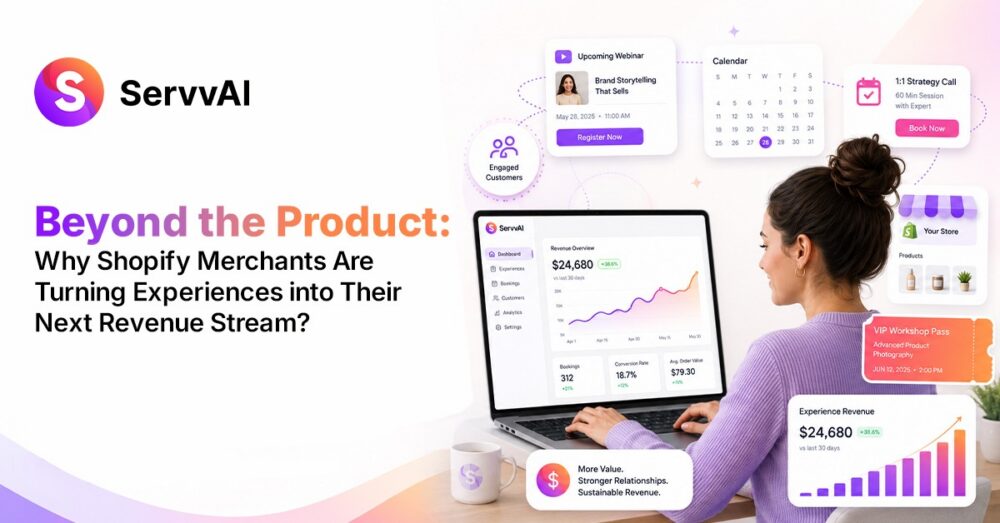
For years, the Shopify playbook was straightforward: Build a store. Sell products. Drive traffic. Increase conversions. And for many businesses, that model still works.
But the eCommerce landscape is changing.
Customer acquisition costs are rising.
Competition is increasing.
Consumers have more choices than ever before.
As a result, Shopify merchants are looking beyond traditional product sales to create new revenue streams, improve customer retention, and build stronger relationships with their audiences.
The most successful brands today are no longer selling products alone. They are selling experiences. From virtual workshops and educational webinars to community events and live coaching sessions, Shopify merchants are discovering that experiences can be just as valuable as physical products—and often more profitable.
This shift is creating a new category of commerce: Experience Commerce. And event management platforms like ServvAI are helping merchants capitalize on it.
Why Product-Only Growth Fails & How to Increase Revenue on Shopify
Every online store owner eventually encounters the same challenge. Growth is becoming increasingly expensive. To increase revenue, businesses have three options:
- Acquire more customers
- Increase average order value
- Improve customer retention
The first option is often the most difficult because advertising costs continue to rise across major platforms. Organic reach is becoming harder to achieve. Competition is growing in almost every niche.
The Power of Experience Commerce: Turning Expertise Into Revenue
Consumers no longer buy products solely based on functionality. They buy expertise, education, transformation, and access. Consider the following examples:
An Art and Craft Brand
A brand that sells handmade items can also host:
- Live painting sessions
- Online competitions
- DIY workshops
A Beauty Brand
A brand that sells skincare products can monetize:
- Skincare consultations
- Expert-led workshops
- Live tutorials
The product becomes the starting point. The experience becomes the growth engine.
How to Sell Services on Shopify Using Your Existing Audience
Interestingly, Shopify merchants already possess the most difficult part of building an event-based business an audience. Unlike standalone event platforms, Shopify stores already have:
- Established customers
- Existing payment infrastructure
- Brand trust
- Built-in marketing systems
The challenge is not attracting attendees. The challenge is giving customers something new to buy. This is where event booking software like ServvAI comes in.
The Shift from Event Platforms to Store-Based Experiences
Traditional event platforms were designed around events. ServvAI approaches the problem differently—it is designed around the Shopify Merchant. ServvAI enables merchants to create, sell, and manage experiences directly within their Shopify ecosystem.
This distinction matters. When customers remain inside a familiar purchasing environment:
- Trust increases
- Conversions improve
- Customer journeys become smoother
- Revenue opportunities expand
The store remains the center of the experience.
How to Sell Services on Shopify Using Your Existing Audience
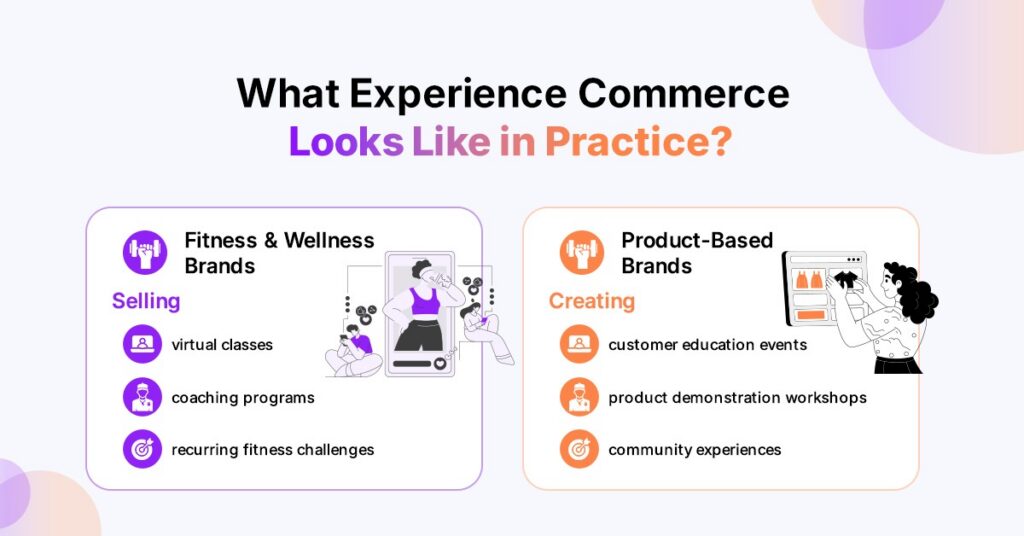
The most innovative Shopify merchants are using experiences in ways that go far beyond traditional webinars:
- Fitness & Wellness Brands: Selling virtual classes, coaching programs, and recurring fitness challenges.
- Educational Businesses: Offering paid workshops, training sessions, and certification programs.
- Product-Based Brands: Creating customer education events, product demonstration workshops, and community experiences.
In every case, the experience enhances the value of the core product offering.
Shopify Customer Retention Strategies: Building Relationships Over Transactions
One of the most overlooked benefits of experience commerce is its impact on customer retention.
Products create transactions. Experiences create relationships.
A customer who attends a workshop, joins a live session, or participates in a community event develops a deeper connection with the brand. That connection leads to:
- Increased trust
- Higher repeat purchase rates
- Stronger brand advocacy
- Greater customer lifetime value
The result is a business that becomes less dependent on constant customer acquisition. Instead of repeatedly finding new buyers, merchants build ecosystems that encourage existing customers to stay engaged.
The Hidden Advantage: Revenue Without Inventory
Traditional eCommerce growth often requires additional inventory, warehousing, shipping, and logistics management. Experiences operate differently. Many event-based revenue streams require little to no physical inventory.
For merchants seeking higher-margin opportunities, this creates an incredibly attractive growth channel.
Choosing the Right Shopify Event Booking App: How ServvAI Simplifies the Workflow
Launching events, even online, includes multiple steps registrations, payments, webinar link generation, scheduling, sending reminders, and data collection.
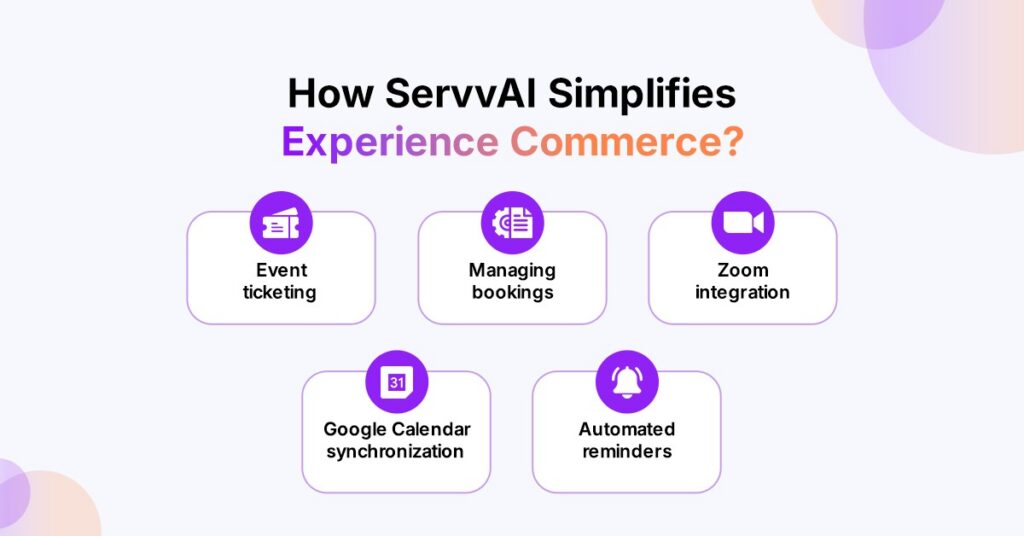
ServvAI brings these workflows together inside Shopify. Merchants can manage almost everything with ServvAI integration, including:
- Event ticketing
- Managing bookings
- Zoom integration
- Google Calendar synchronization
- Automated reminders
This reduces complexity while creating a smoother experience for both businesses and customers.
The Future of Shopify Is Bigger Than Products
The future of eCommerce is not about choosing between products and experiences. The most successful brands will combine both.
Products attract customers and generate transactions. But experiences create communities and drive long-term growth.
With an event creation platform like ServvAI, Shopify merchants can transform their stores into destinations for learning, engagement, and connection, unlocking entirely new revenue streams without abandoning the products that built their businesses in the first place.
The question is no longer whether experiences belong in eCommerce. The question is how quickly merchants can start monetizing them.

Helpful ServvAI Resources for shopify experiences
If you are exploring shopify experiences, the ServvAI blog has more ideas on events, appointments, creator revenue, product education, and customer experiences.
Shopify merchants can review the ServvAI Shopify app, while WordPress and WooCommerce users can explore the ServvAI WordPress plugin for event booking and scheduling workflows.