
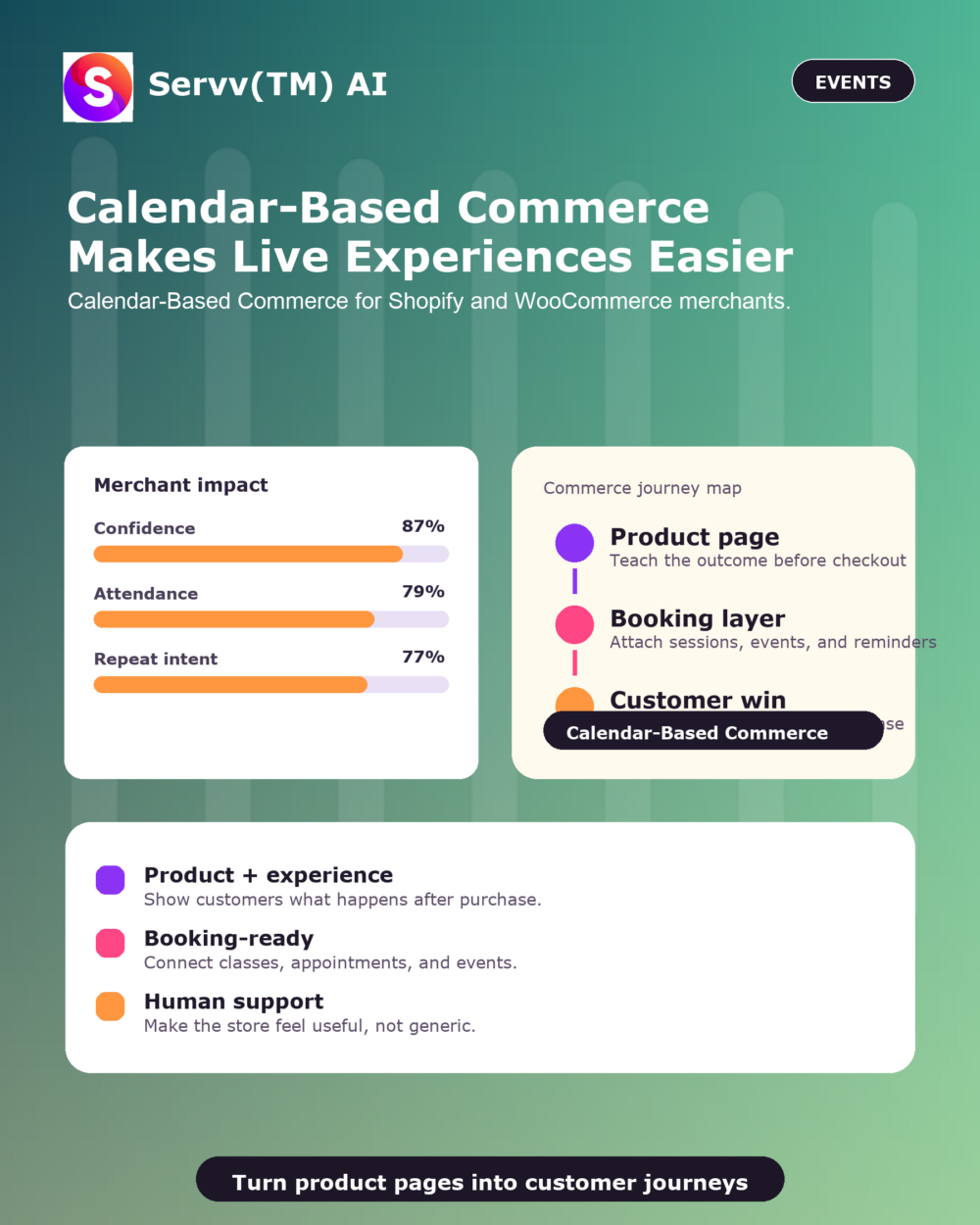
Calendar-Based Commerce can make a product page feel less like a catalog and more like a helpful next step. For Shopify and WooCommerce merchants, that matters because shoppers are not only buying an item. They are often buying confidence that they can use it well.
Why Calendar-Based Commerce Matter for Merchants
Most product pages explain what is included. Better product pages also explain what happens next. That is where calendar-based commerce become useful for merchants who sell products that need instruction, setup, coaching, or a bit of human reassurance.
This is where calendar-based commerce become practical. Many merchants do not need more traffic first. They need the traffic they already have to understand the product better. Add videos, sessions, appointments and courses where the customer is deciding. For sports brands, that detail matters.
That is one small way calendar-based commerce can change the buying moment. Courses do not have to feel separate from commerce. Show a free trailer, sell the premium class, then send the private link after purchase. The cleanest course funnel may already be the product page. For wellness brands, that detail matters.
For merchants, this is not a theory; calendar-based commerce can be attached to one product first. Embedded booking matters because leaving the store is where intent cools off. For art brands, keeping Calendly, Google Appointments or Teams Bookings inside Shopify protects the buying rhythm.
How Shopify and WooCommerce Stores Can Use Calendar-Based Commerce
For Shopify merchants, the opportunity is to keep the experience close to checkout. The ServvAI Shopify app helps attach events, appointments, and classes to the commerce flow instead of sending customers into disconnected tools.
For WooCommerce merchants, the same idea can live inside WordPress. The ServvAI WordPress plugin helps stores add booking and event experiences where customers already make decisions.
A Simple Calendar-Based Commerce Test
After reading a product page, ask one question: does the customer know how to succeed with the product? If the answer is not really, add a small event, appointment, class, demo, trailer, or onboarding session.
- Use a free preview when trust is low.
- Use an appointment when the decision is personal.
- Use a workshop when customers need to learn by doing.
- Use reminders when the experience happens after purchase.
You can keep exploring practical examples in the ServvAI blog, especially if your store is testing product education, live shopping, appointments, or post-purchase sessions.
Where ServvAI Fits
ServvAI helps merchants turn products into connected customer journeys. The point is not to make ecommerce heavier. It is to give customers one clear next step, then make that step easy to join.
Start small. Choose one product that already creates questions. Add one useful session. Then let calendar-based commerce show whether customers feel more confident, more supported, and more likely to come back.